Robotics
Revolutionise your welding with Plazmax Robotics
The success of robotic welding in the automotive sector has led the way for robotics becoming more and more mainstream in the industrial sector as manufacturers seek to replicate the efficiency of the modern production line.
Over the past decade, robotic welding has really come of age, and now with products like Plazmax’s Synchronous Robotic Systems you don’t need to be an operation the size of General Motors to take advantage of the incredible benefits that come with robotic welding.
Unlock the benefits of robotic welding
Consistently Higher-Quality Welds
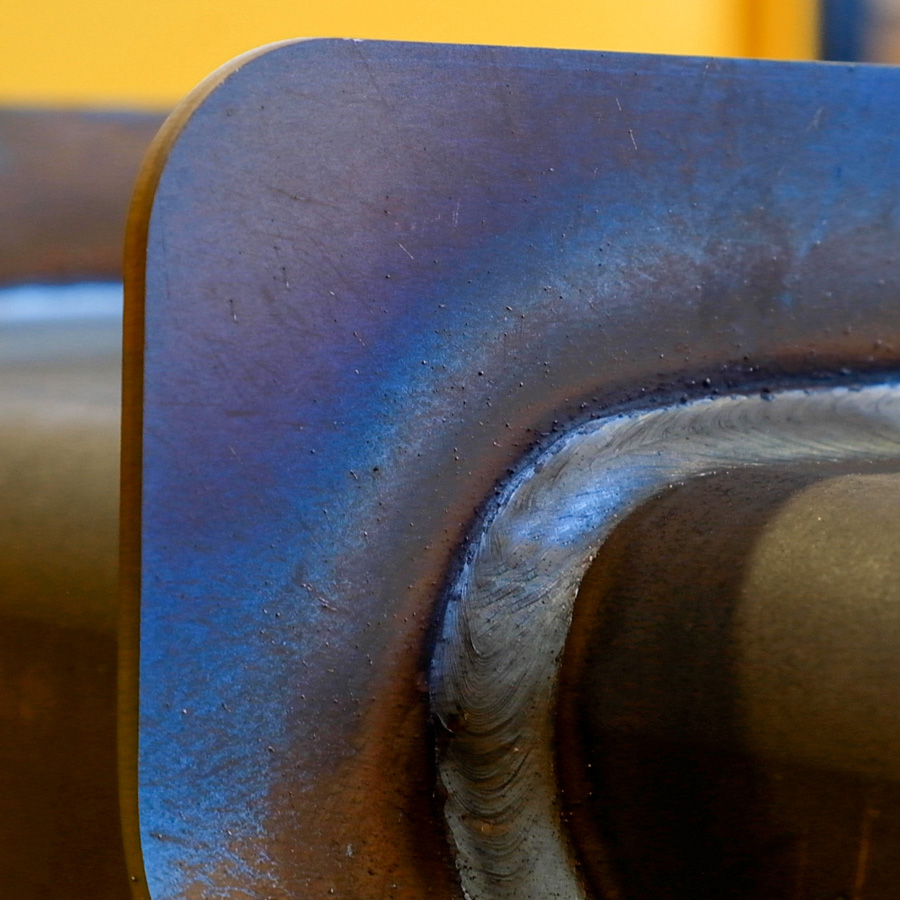
If ultimate quality’s the goal, then the solution has to be a Plazmax robotic welding cell. Even the most experienced professional welder can’t compete with the quality and consistency of the weld produced by a well setup robotic rig.
Unleash Productivity
Robotic automation allows the typical 8-hour workplace to be retooled for 12, 18 or even 24-hour service. Not only is the uplift in productivity huge, staff who’d normally be absorbed by manual and repetitive work can be reassigned to other productive tasks.
Minimise Waste and Rework
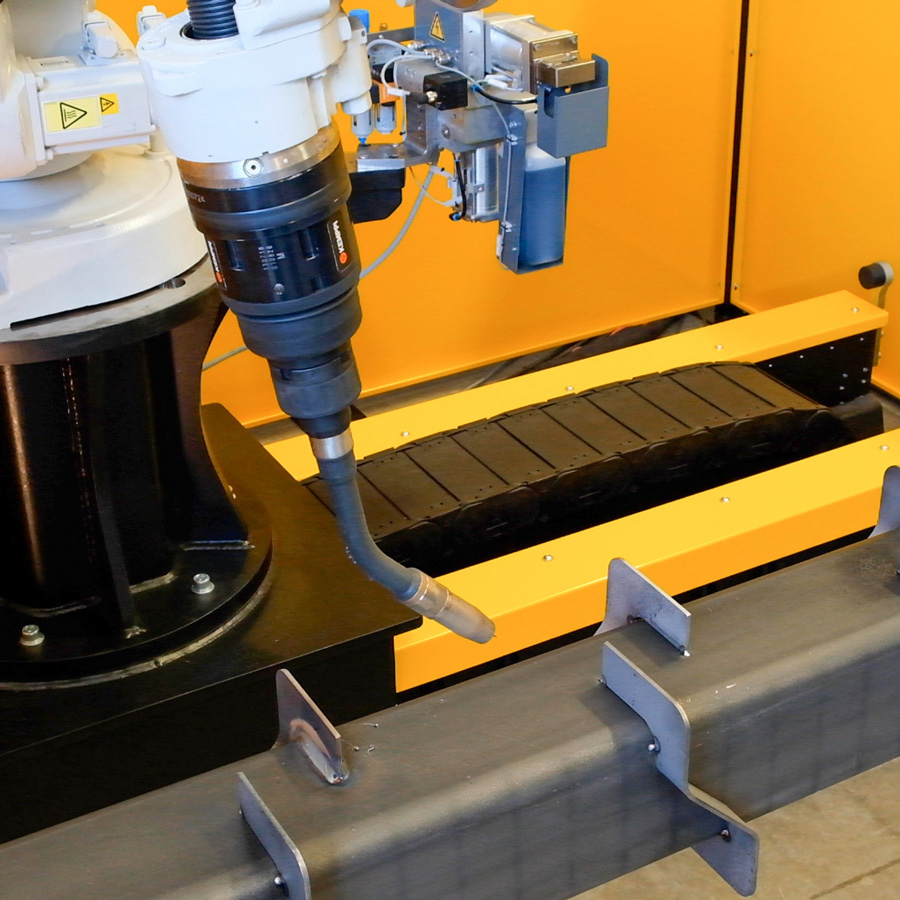
Regardless of the scale of your operation, overwelding can be a huge source of waste. Plazmax’s proprietary Robotmaster software uses ultra-precise specifications to minimise metal filler costs without compromising bond strength.

Reduced Post-Weld Cleanup
Even with a robotic rig some post-weld cleanup is unavoidable, but with less wasted material and spattering, cleanup time and downtime between projects is minimised.
Unleash Faster, More Efficient Road to the Market
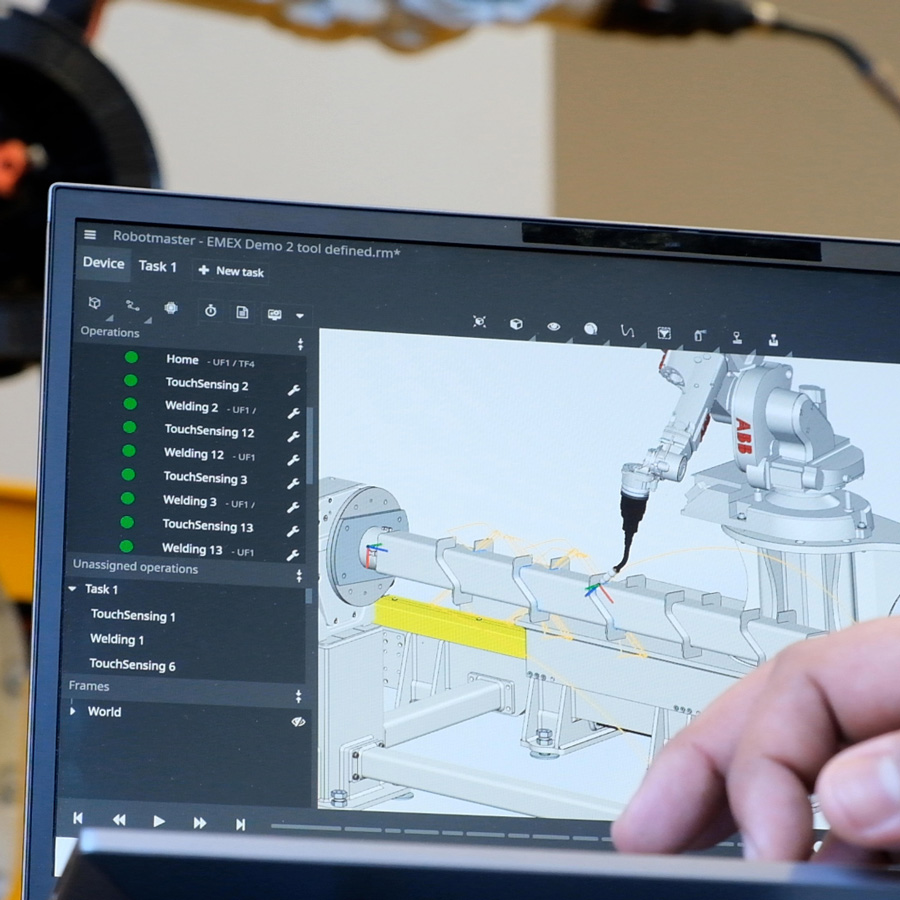
The granular control available with Robotmaster software lets users adapt quickly to new tasks and programme them to be infinitely repeatable. That kind of agility is a huge benefit to operations of all scales looking for a competitive advantage.
Safety
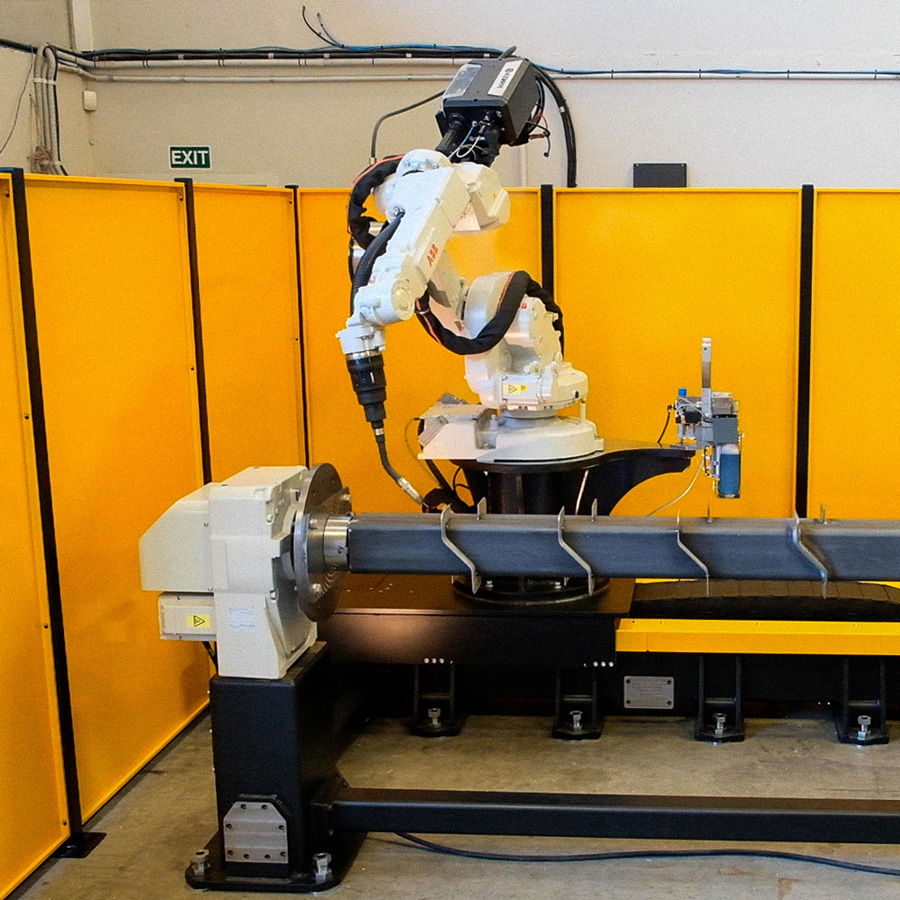
Robot cells distance operators from hazardous operating conditions and repetitive tasks that can have negative long-term effects. By removing human fatigue from the equation, error and injury are also no longer problematic.
FAQs
Why Use Robots for Welding?
Certain fields of human endeavour are arduous and potentially dangerous, and removing humans from the frontline is a positive thing. Welding is one of them. It’s hot, strenuous and can be hazardous, so why put an employee at risk when you could hand the job over to a machine?
The idea of the robot has been around for more than a century, and the word originated in the Czech language, meaning forced labour. It took many years for the world to actually find useful things for a robot to do, and the word became a term of derision, often directed at people who were seen as having no individuality or mind of their own. That is, of course, a good attribute to have in the world of manufacturing, where a job has to be done no matter what, and to rigid specifications with no margin for error.
As technology has evolved to take in the digital revolution, robots have become a reality, doing jobs that people don’t want to do, whether that is because they are dangerous or just boring. That now encompasses everything from clearing minefields to vacuuming the house with a cute little machine that bustles around on the floor, sucking up dirt and dust as it goes.
Robot welding is a very different area, of course, and “cute” is not applicable here. We’re looking at words like tough and practical. Welding produces joints that have to be utterly reliable forever, so it has to be done right.
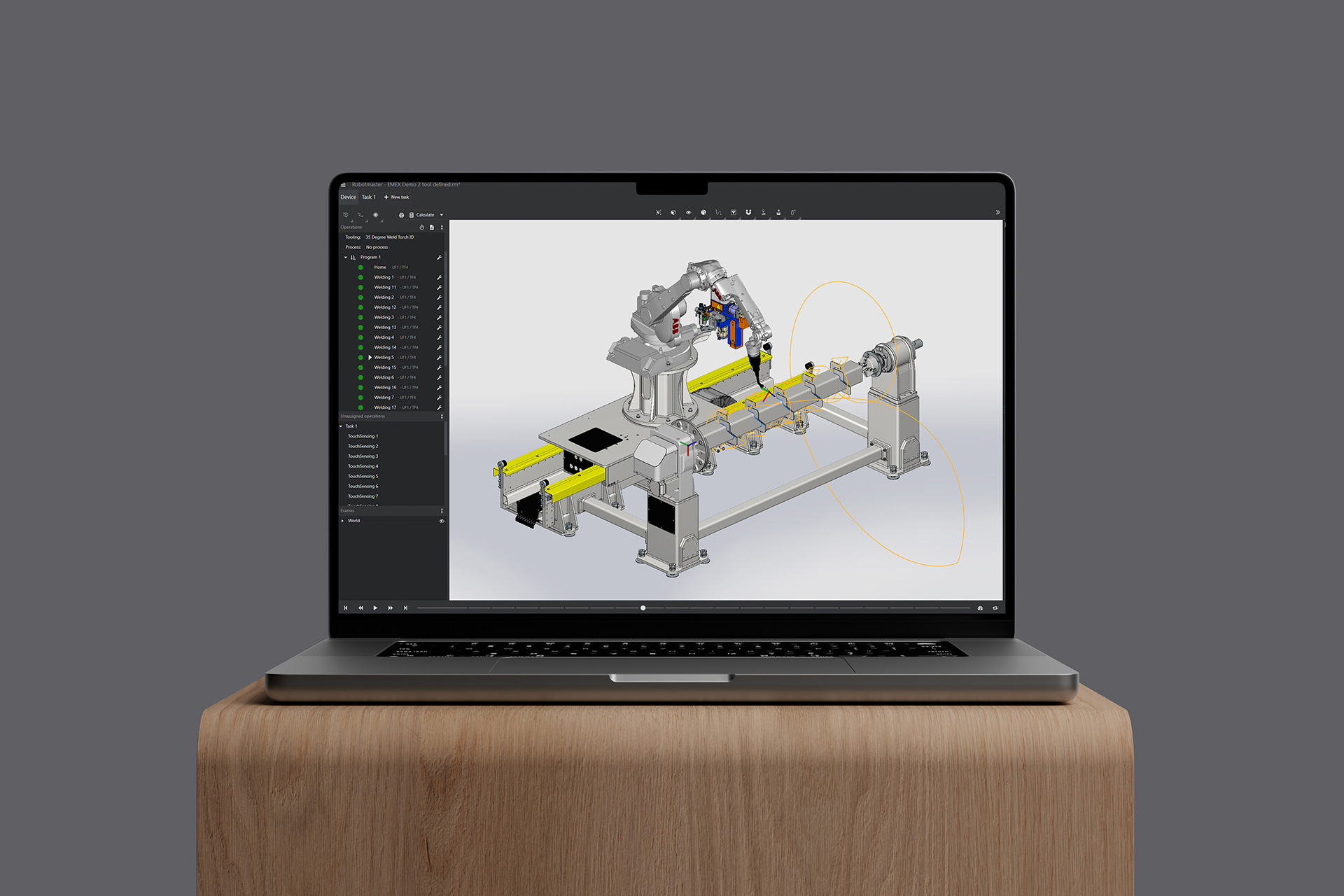
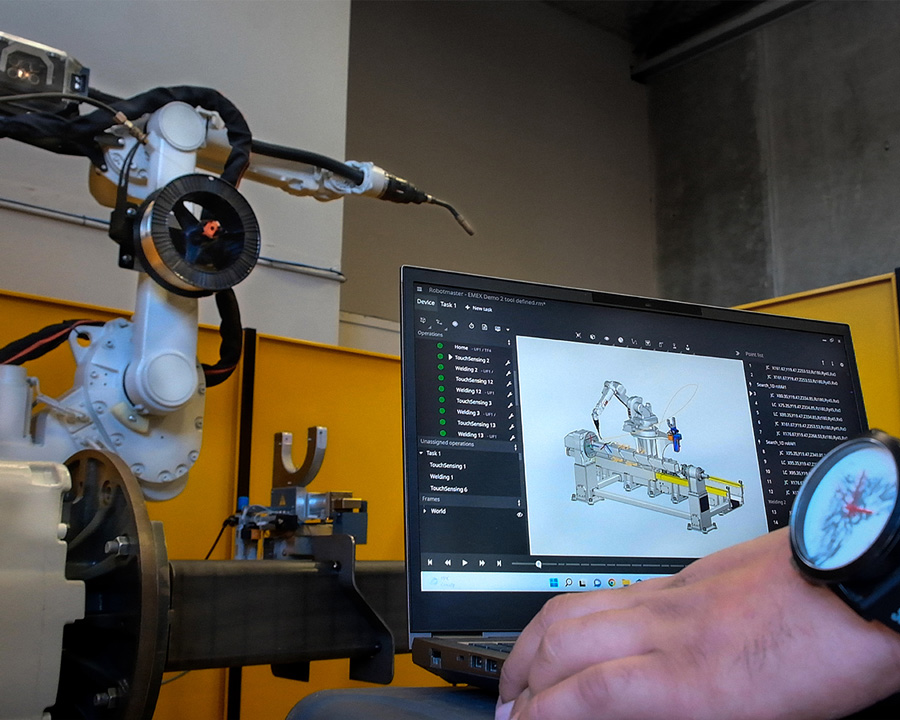
Robotmaster is the name of the software we use that enables customers to program the robot welders relatively simply. We understand that ease of use is vitally important, and we don’t want our customers blinded by the need to perform complex programming. This is why we offer a full-fledged offline programming capability for robots that gets the job done quickly and efficiently.
What are the Advantages of Robot Welding?
The quality of the work is key in every aspect of manufacturing, and robot welding offers the benefit of consistent standards. It means high-quality welds every time, and that means less waste, fewer rejects, less reworking to do and better results for the quality control department to enjoy. What follows is a better reputation for the company, which is seen as reliable.
Robotic welding increases productivity, too, because robots don’t get tired, don’t take tea breaks or smoke breaks and don’t insist on a time limit on their shift. If you want to push past the eight-hour mark to get more work done, possibly even around the clock, with robotic welding, you can do that. You may need to have staff around the place in a supervisory capacity, but not at the sharp end.
This sort of work can be repetitive, too, and your skilled staff can be getting on with things more deserving of their time and talents.
Some welding expertise will be needed to ensure standards are maintained, and it is easy to reprogram the machine to take on a slightly or very different task, because there is no learning or practising involved. If a robot welder is given the correct instructions, the job is done right the first time and every subsequent time.
With increased control of the welding process comes less mess and, therefore, shorter clean-up times. It all helps the efficiency of the workshop and the manufacturing process overall.
How Did Plazmax Become a Major Player in Robotic Welding?
We have been in this business for more than ten years now. We started out in New Zealand, where we pioneered the plasma cutting revolution because we believed in the potential of plasma and felt it was being underplayed. We pushed the envelope, made developments ourselves and adopted new practices and techniques as they appeared in the industry.
With robot welding being a related field, we applied ourselves to that specialised area too, and our overall success at home encouraged us to expand our horizons, with Australia being a logical place to branch out to. Thanks to a seriously high-quality range of machines and our dedication to the needs of our customers (including training, maintenance and our 24/7 breakdown on-call service), we have established ourselves here too, setting up a network of dedicated partners to look after customers all over the country.
Robot welding is just one facet of what we do, but it is all in the same sector: it’s not that different from CNC plasma cutting, harnessing the power of extreme heat and getting a computer to control the movement.
Where can you Buy the Robotic Welding Systems Australia is Talking About?
Can They Boost Your Productivity and Increase Your Capabilities?
Contact us and we can talk you through the advantages and show you the model that would best suit your operation.
Why Use Robots for Welding?
Certain fields of human endeavour are arduous and potentially dangerous, and removing humans from the frontline is a positive thing. Welding is one of them. It’s hot, strenuous and can be hazardous, so why put an employee at risk when you could hand the job over to a machine?
The idea of the robot has been around for more than a century, and the word originated in the Czech language, meaning forced labour. It took many years for the world to actually find useful things for a robot to do, and the word became a term of derision, often directed at people who were seen as having no individuality or mind of their own. That is, of course, a good attribute to have in the world of manufacturing, where a job has to be done no matter what, and to rigid specifications with no margin for error. Read More
As technology has evolved to take in the digital revolution, robots have become a reality, doing jobs that people don’t want to do, whether that is because they are dangerous or just boring. That now encompasses everything from clearing minefields to vacuuming the house with a cute little machine that bustles around on the floor, sucking up dirt and dust as it goes.
Robot welding is a very different area, of course, and “cute” is not applicable here. We’re looking at words like tough and practical. Welding produces joints that have to be utterly reliable forever, so it has to be done right.
Robotmaster is the name of the software we use that enables customers to program the robot welders relatively simply. We understand that ease of use is vitally important, and we don’t want our customers blinded by the need to perform complex programming. This is why we offer a full-fledged offline programming capability for robots that gets the job done quickly and efficiently.
What are the Advantages of Robot Welding?
The quality of the work is key in every aspect of manufacturing, and robot welding offers the benefit of consistent standards. It means high-quality welds every time, and that means less waste, fewer rejects, less reworking to do and better results for the quality control department to enjoy. What follows is a better reputation for the company, which is seen as reliable.
Robotic welding increases productivity, too, because robots don’t get tired, don’t take tea breaks or smoke breaks and don’t insist on a time limit on their shift. If you want to push past the eight-hour mark to get more work done, possibly even around the clock, with robotic welding, you can do that. You may need to have staff around the place in a supervisory capacity, but not at the sharp end.
This sort of work can be repetitive, too, and your skilled staff can be getting on with things more deserving of their time and talents.
Some welding expertise will be needed to ensure standards are maintained, and it is easy to reprogram the machine to take on a slightly or very different task, because there is no learning or practising involved. If a robot welder is given the correct instructions, the job is done right the first time and every subsequent time.
With increased control of the welding process comes less mess and, therefore, shorter clean-up times. It all helps the efficiency of the workshop and the manufacturing process overall.
How Did Plazmax Become a Major Player in Robotic Welding?
We have been in this business for more than ten years now. We started out in New Zealand, where we pioneered the plasma cutting revolution because we believed in the potential of plasma and felt it was being underplayed. We pushed the envelope, made developments ourselves and adopted new practices and techniques as they appeared in the industry.
With robot welding being a related field, we applied ourselves to that specialised area too, and our overall success at home encouraged us to expand our horizons, with Australia being a logical place to branch out to. Thanks to a seriously high-quality range of machines and our dedication to the needs of our customers (including training, maintenance and our 24/7 breakdown on-call service), we have established ourselves here too, setting up a network of dedicated partners to look after customers all over the country.
Robot welding is just one facet of what we do, but it is all in the same sector: it’s not that different from CNC plasma cutting, harnessing the power of extreme heat and getting a computer to control the movement.
{ "@context": "https://schema.org", "@type": "FAQPage", "mainEntity": [ { "@type": "Question", "name": "Why Use Robots for Welding?", "acceptedAnswer": { "@type": "Answer", "text": "Welding is hot, strenuous, and potentially hazardous work. Robots remove people from the frontline, delivering consistent, specification-tight results with no fatigue or safety risk. As digital technology matured, robots became reliable for tasks that demand precision and repeatability—welding included." } }, { "@type": "Question", "name": "What are the Advantages of Robot Welding?", "acceptedAnswer": { "@type": "Answer", "text": "Robotic welding delivers consistent, high-quality welds that reduce waste, rework, and rejects. Productivity increases because robots can run beyond standard shifts without breaks, while skilled staff focus on higher-value work. Programs are easy to adjust for new jobs, and tighter process control means less mess and faster clean-up." } }, { "@type": "Question", "name": "How Did Plazmax Become a Major Player in Robotic Welding?", "acceptedAnswer": { "@type": "Answer", "text": "Plazmax built expertise over more than a decade, starting in New Zealand by advancing plasma cutting and adopting new techniques. Expanding into Australia, the company paired high-quality machines with customer support—training, maintenance, and 24/7 breakdown service—while developing a partner network nationwide. Robotic welding complements their CNC plasma focus by combining controlled heat with computer-guided motion." } } ] }
Finance Options
Although it’s obvious to most the Return On Investment a high-tech piece of equipment can provide, banks and lenders don’t always understand your industry and the importance of such purchases.